
Independent deer population evidence, mapped and repeatable
Thermal drone surveying provides a clear, repeatable baseline of deer numbers and distribution across estates, forests and conservation land. It gives land managers evidence they can use, share and compare over time.
Every confirmed detection can be mapped into GIS-ready outputs and presented through a simple interactive webviewer, giving clients a visual record that is easy to understand and straightforward to use in management reporting.
Repeatable coverage
Structured block-based survey planning designed to support full and repeatable coverage.
Thermal + RGB
Thermal detection supported by RGB imagery where possible for additional confidence.
GIS-ready outputs
KML / mapped outputs that can be opened in Google Earth or incorporated into GIS workflows.
Minimum confirmed counts
Counts should be treated as minimum confirmed numbers, particularly in denser woodland.
In woodland, low-access areas and visually complex terrain, thermal often reveals deer that would otherwise be difficult to locate reliably from the ground or standard aerial imagery alone.
From hidden animals to mapped evidence
Drag the thermal comparison below. Then look at the mapped output. This is the core of the service: detect what is difficult to see, record it spatially, and turn it into evidence that can be reviewed with clients and management teams.
Four deer. Easy to miss in standard imagery.
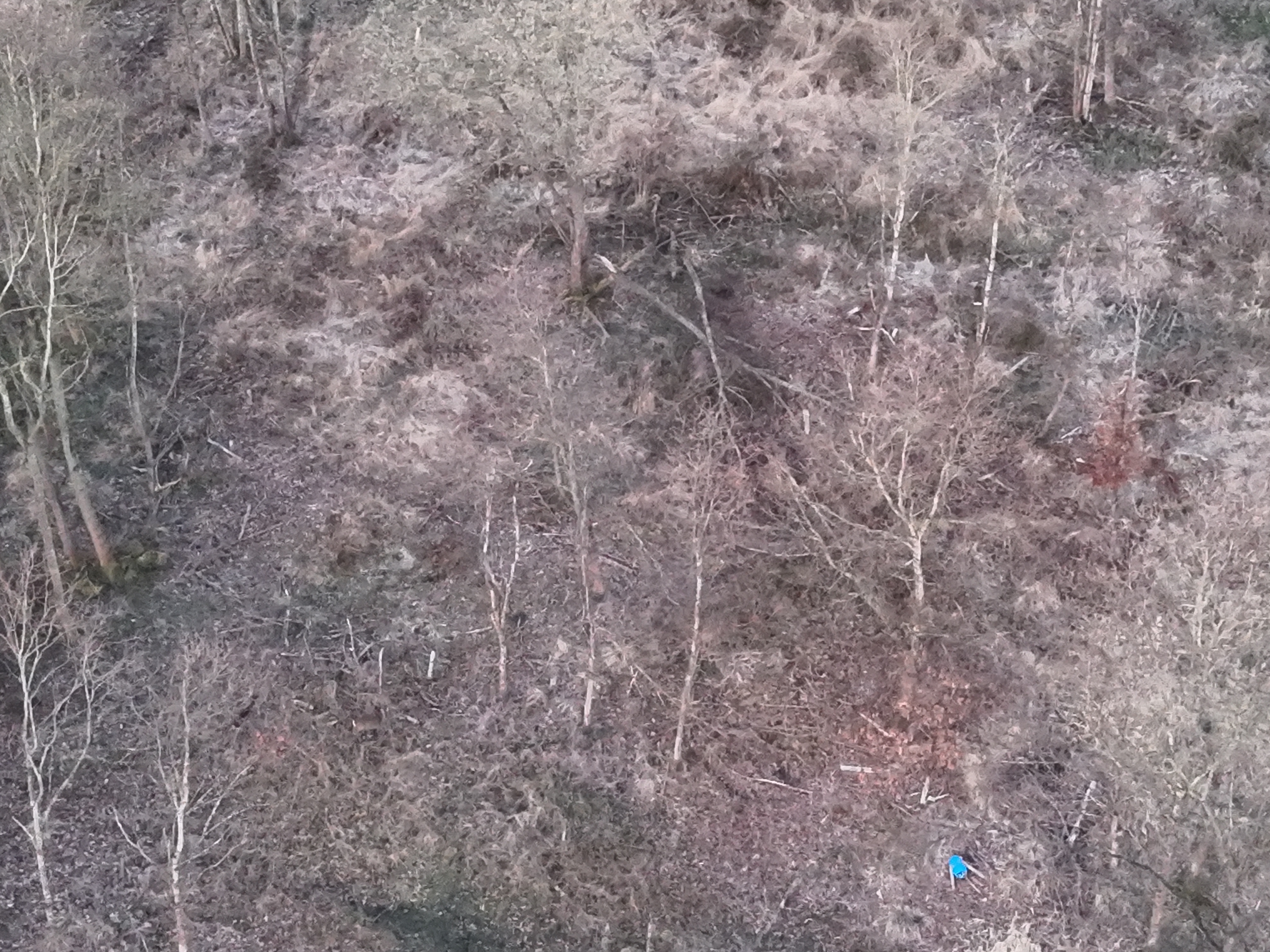
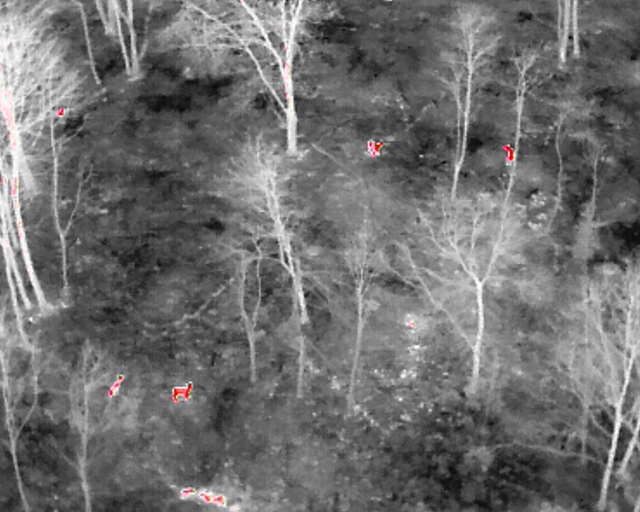
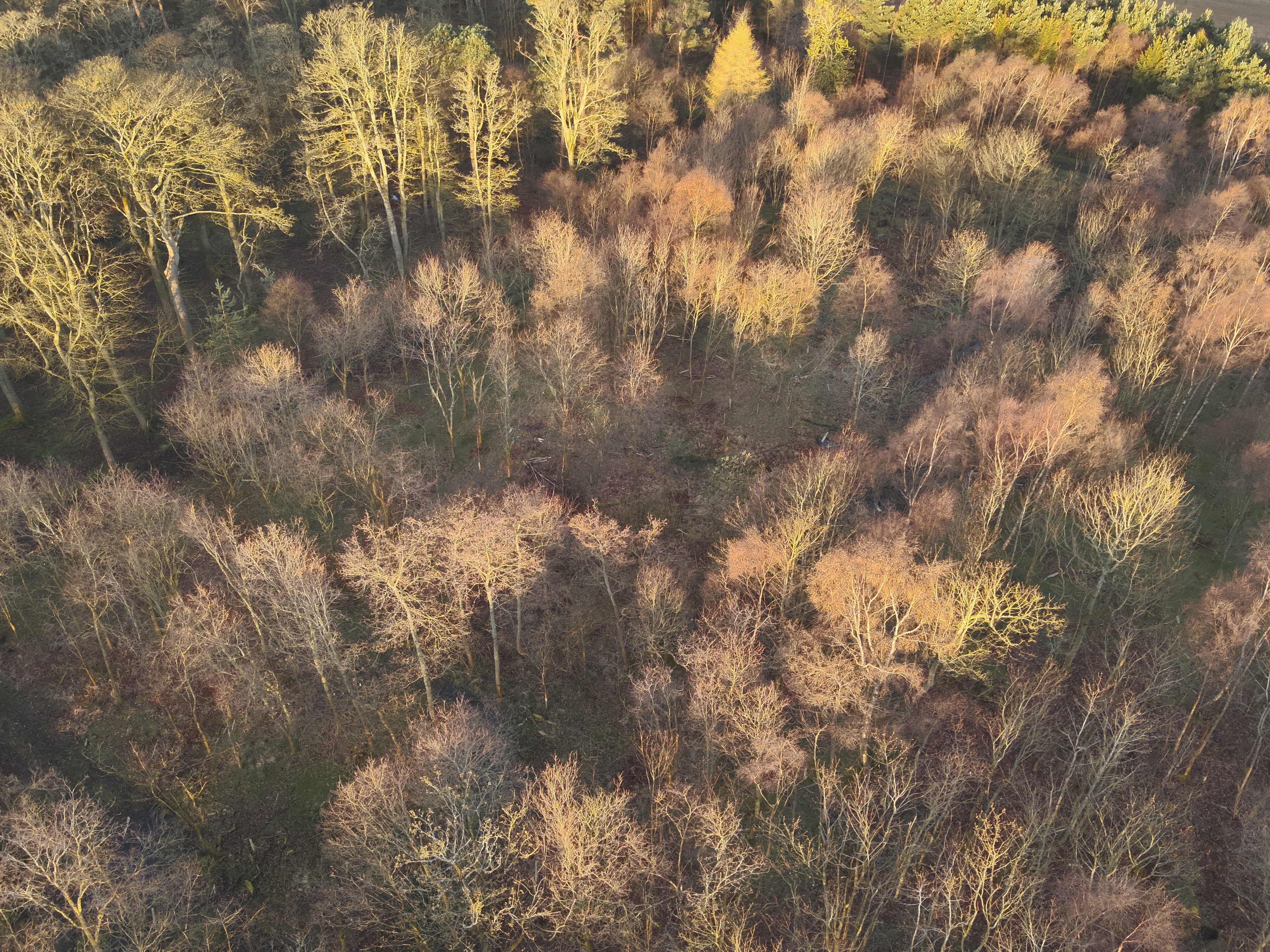
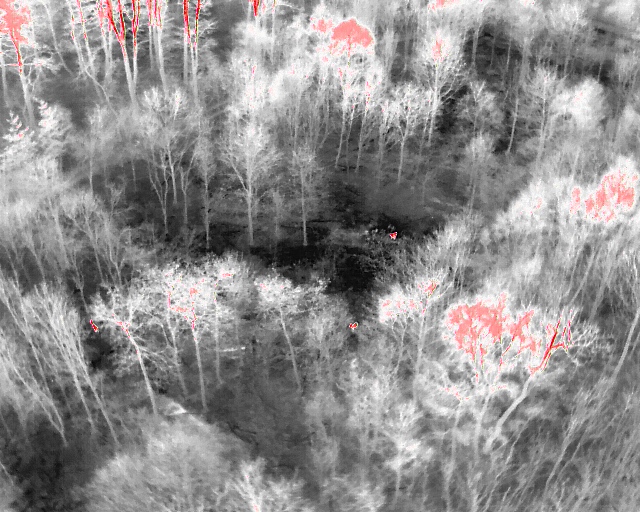
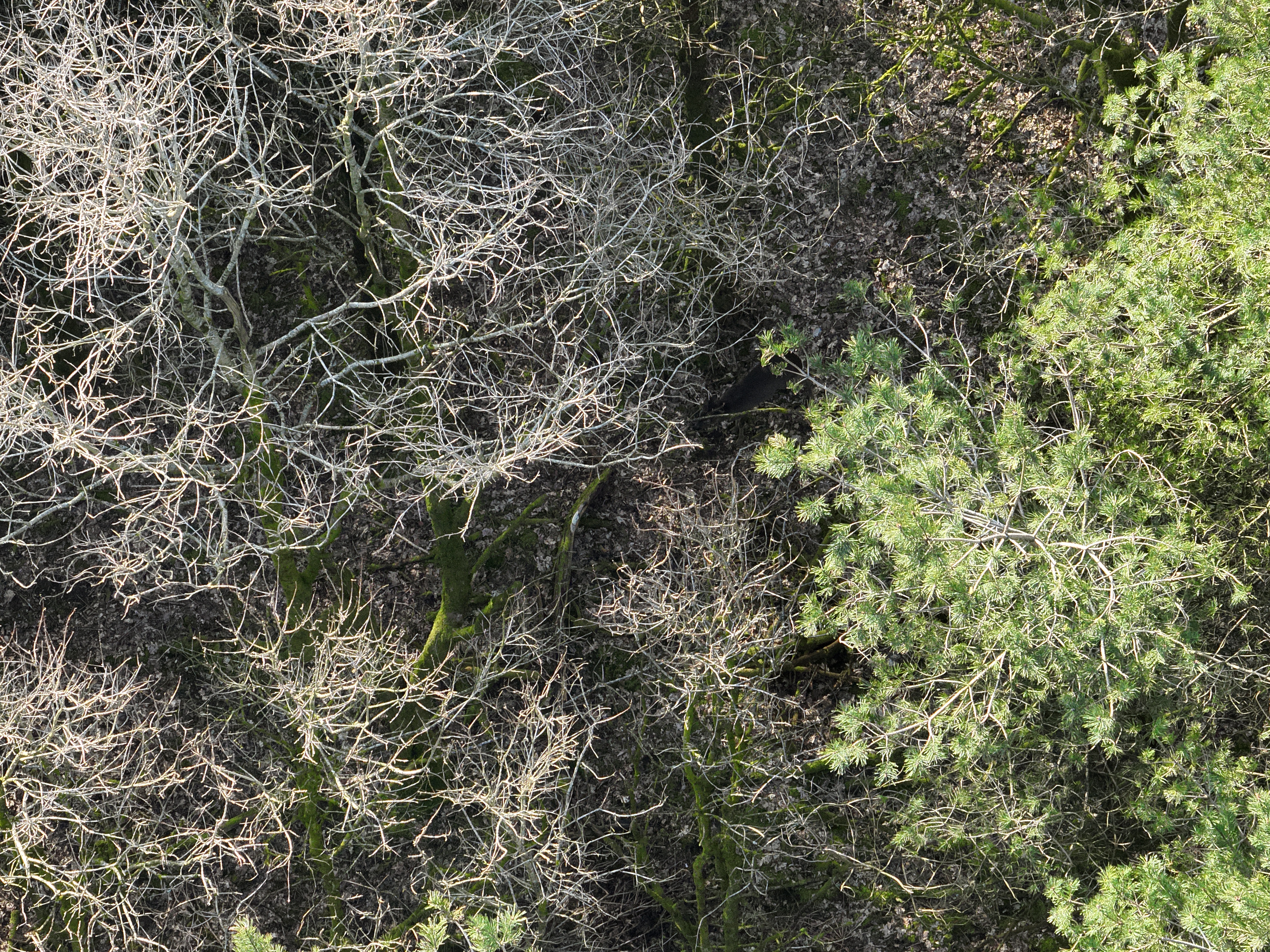
Thermal can reveal animals concealed by vegetation, shadow and visual clutter, helping produce a more complete minimum confirmed count.
Every confirmed detection becomes usable data.
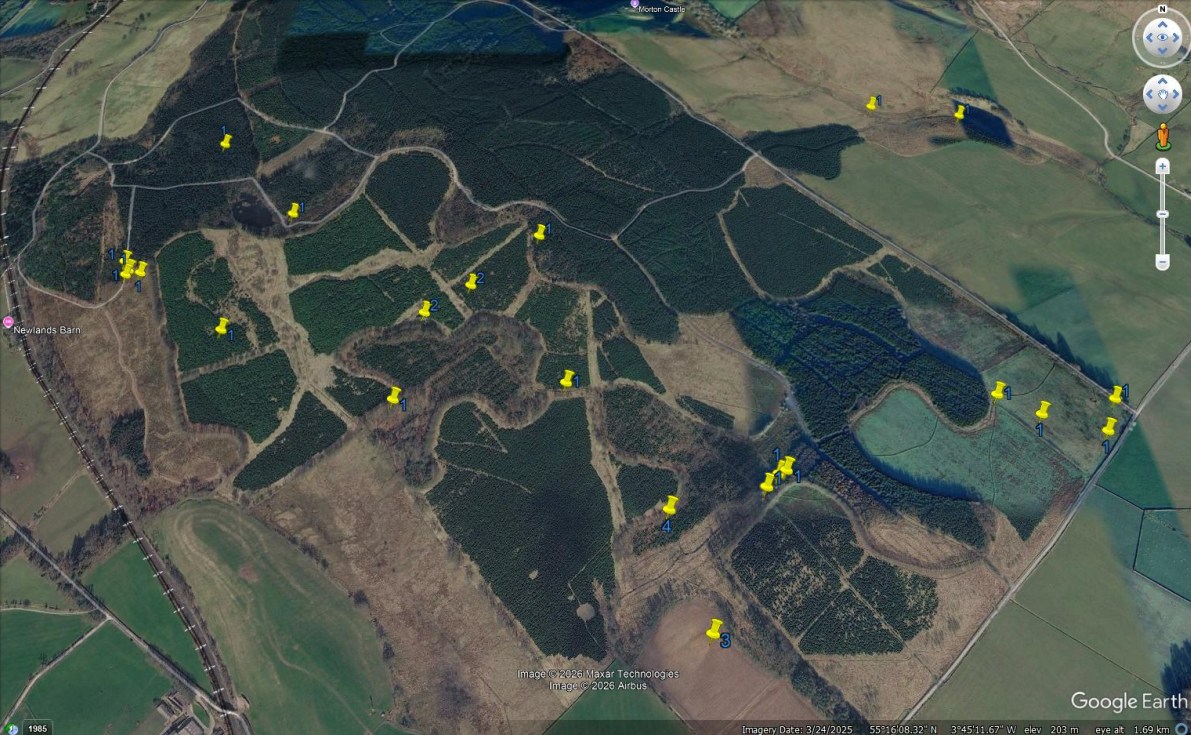
Outputs are designed to slot directly into estate, forestry and deer management reporting, and to be simple enough to put in front of a client without specialist software.
Estate, woodland and conservation survey experience
Thermal deer survey work has been undertaken across estate, woodland and conservation settings, including Drumlanrig, Hopetoun and National Trust-managed land. Repeat counts have now also been completed for National Trust-managed land and other estate clients.
The value of the method is not simply the count itself. It is the ability to provide mapped, repeatable evidence that can sit alongside keeper knowledge, estate records, habitat observations and woodland management objectives.
Thermal surveys sit alongside traditional counts
The strongest approach is not one method replacing another. It is combining local field knowledge, stalking records, habitat understanding and independent aerial evidence to support more defensible deer management decisions.
Ground knowledge remains valuable
Rangers, keepers and estate teams hold essential site knowledge, seasonal context and behavioural insight.
Visibility can still limit counts
Woodland cover, terrain, access, observer position and light conditions can all reduce detectability.
Thermal adds an evidence layer
Thermal detection helps locate deer, map their distribution and provide a repeatable baseline.
Outputs can be compared over time
Repeat surveys allow direct comparison across seasons, years or following management interventions.
Repeat counts for National Trust-managed land and other estate clients
Repeat surveying is where the method becomes especially useful for land managers. Vista has now completed repeat thermal deer counts for National Trust-managed land and other estate clients, using consistent mapped survey scopes and repeatable aerial methodology to build comparable evidence over time.
Why repeat the survey?
A single survey provides a useful population snapshot. Repeating the same approach gives land managers a much stronger evidence trail, allowing them to review deer numbers and distribution after culling, habitat work or other management intervention.
The value is not simply a second count. It is the ability to compare results against an established baseline using a consistent survey method, then present the findings clearly to landowners, clients, forestry teams and other stakeholders.
Management value: repeat monitoring helps move deer management away from isolated estimates and towards a documented evidence base that can be reviewed over time.
Client confidentiality matters. Specific site locations, population figures and detailed survey results are not published without permission.
Where deer management funding exists, good evidence strengthens the case
Thermal surveying does not automatically make a project eligible for grant funding and we do not present survey costs as automatically recoverable. What it can provide is an independent, mapped evidence layer to support management planning, demonstrate deer numbers and distribution, establish a baseline and help show whether intervention is working over time.
per year for 10 years
Countryside Stewardship Higher Tier action CWS1 supports deer control and management on eligible land where deer are harming priority species or habitats.
Official GOV.UK guidanceHow thermal evidence can help
- Establish an independent baseline of deer numbers and distribution.
- Provide mapped evidence to support a Species Management Plan and wider woodland management discussions.
- Highlight concentrations of deer activity across large or difficult-to-observe sites.
- Repeat the same survey after management intervention to provide comparable evidence of change.
Deer Management Plan grant support
Scottish Forestry's Woodland Improvement Grant currently pays £12/ha for the first 500 hectares and £1/ha thereafter, with a £5,000 minimum and £15,000 maximum.
Official Rural Payments guidanceWhy independent survey evidence matters
Scottish guidance states that a Deer Management Plan must be based on an accurate, independent third-party assessment of deer densities. Survey results are then used to develop the population model and culling plan.
- Mapped count and density evidence can strengthen the baseline used in management planning.
- Repeat surveys can help track whether deer numbers and distribution are moving towards management objectives.
- Clear web-based outputs make it easier to review evidence with landowners, clients and management teams.
of a qualifying specialist survey cost
Under the Woodland Creation Planning Scheme, where NRW or Heneb advises that a specialist survey is required, 80% of the eligible survey cost can be claimed, subject to scheme conditions and the overall £5,000 grant ceiling.
Official Welsh Government guidanceDeer evidence within Welsh woodland management
The Sustainable Farming Scheme supports enhanced woodland management, and Welsh Government guidance states that coordinated activity with other landowners, including deer control, may be available through the Collaborative Layer.
- Use mapped numbers and distribution to demonstrate the scale of deer pressure.
- Build an objective baseline before culling, fencing or woodland management activity begins.
- Support discussions around collaborative deer management across neighbouring holdings.
- Repeat the survey later to provide evidence of management effectiveness.
Practical evidence, designed for real management decisions. Survey costs vary by site area, terrain, woodland cover and required outputs. Vista's thermal surveys have proved cost effective for existing clients, several of whom now use the service on a repeat basis. Outputs are designed to be easy to digest and to slot directly into management reporting: clear population totals, mapped detections, density summaries, GIS-ready files and an interactive webviewer that can be shared with landowners and clients.
Only pay for the level of detail you actually need
Some clients need a robust population number and spatial distribution. Others require species, group structure and additional classification. The survey scope can be matched to the management question rather than adding analysis that will not be used.
Population Survey
Focused on reliable raw numbers, mapped detections, distribution and density. Well suited to forestry managers who need a defensible population baseline for practical deer management and client reporting.
- Total observed population
- Mapped detection locations
- Density summaries
- GIS / KML outputs
- Interactive webviewer
Detailed Population Survey
Adds further species and demographic classification where image quality, habitat and survey conditions allow and where that detail is relevant to the management objective.
- Everything in the Population Survey
- Species classification where sufficiently supported
- Group structure and demographic analysis where appropriate
- Additional thermal / RGB evidence
- Enhanced reporting for repeat monitoring
How the survey works
Each survey is planned in advance using a structured, block-based approach. Woodland can be flown with tighter transect spacing to account for canopy cover and reduced visibility, helping support consistent coverage and reduce the risk of double counting.
Define the survey area
Estate blocks, compartments, woodland sections and operational constraints are mapped in advance.
Plan repeatable flight blocks
Systematic flight lines are designed to support full coverage and a defensible, repeatable methodology.
Detect using thermal
Thermal imagery isolates heat signatures that may be difficult or impossible to detect in standard imagery.
Use RGB for added confirmation
Where possible, RGB imagery is used to help confirm species, group size and context.
Map detections
Confirmed deer detections are geolocated and plotted into GIS-ready outputs such as KML/KMZ.
Report counts and density
Survey outputs can include total deer observed, mapped detections, density summaries and repeat-monitoring baselines.
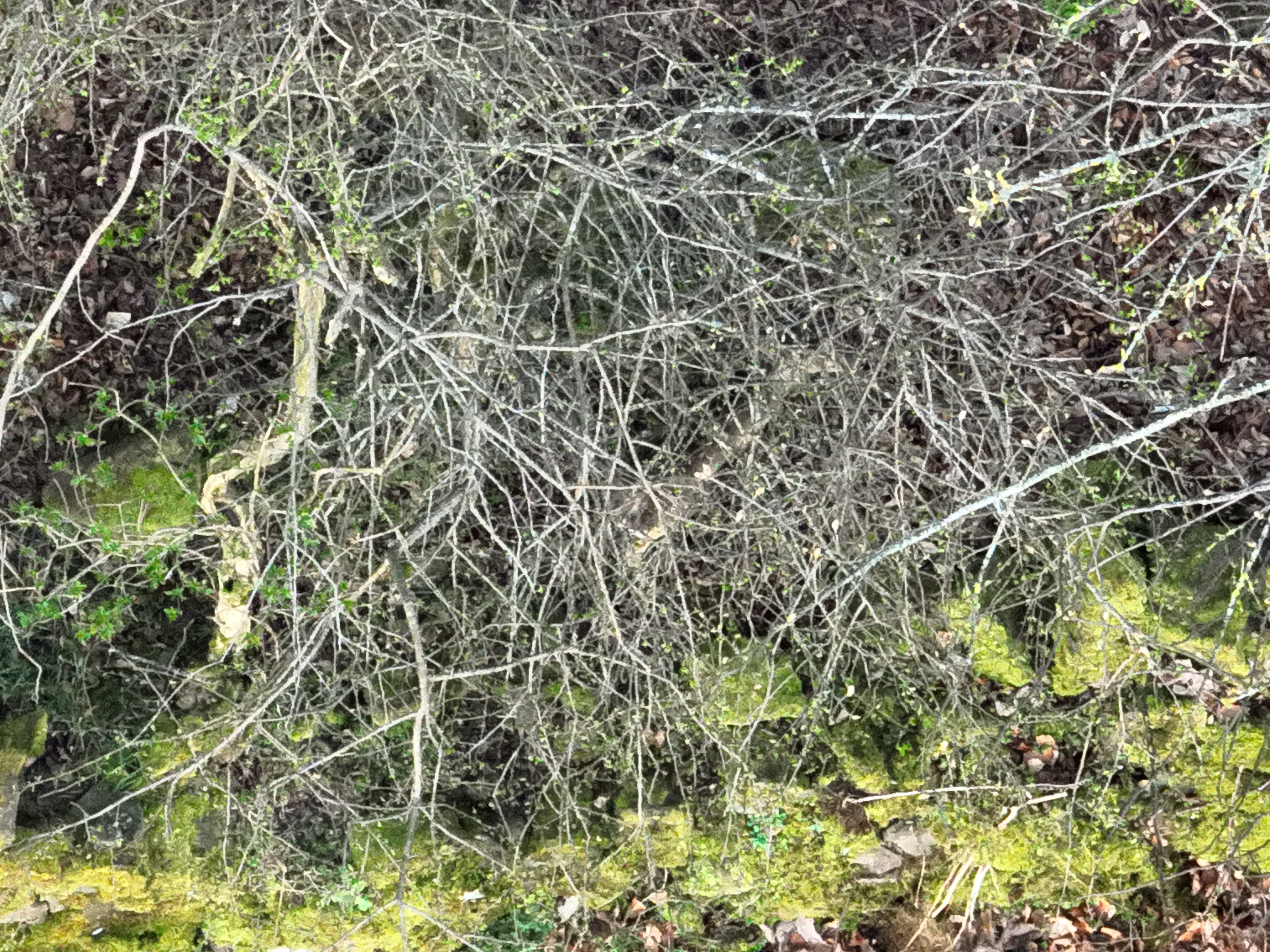
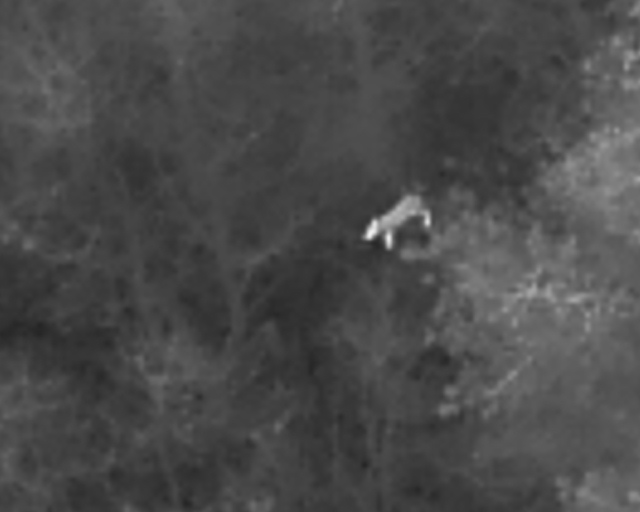
Thermal keeps finding what the eye misses
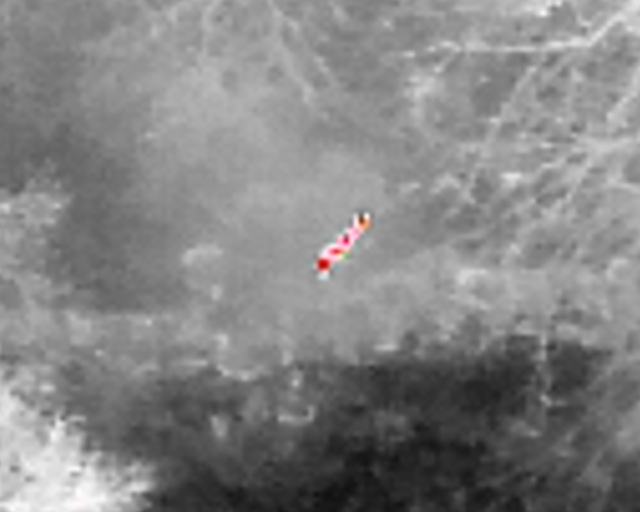
Different habitat and weather conditions change detectability. These additional comparisons show how thermal can support detection in brush, woodland and more challenging conditions.
See the method in action
These examples show how deer respond to the drone during accurate detection range, and how switching between thermal and RGB can aid detection over sensitive woodland.
Little disturbance during detection
This video shows deer within accurate detection range. The deer do not react to the drone’s presence, illustrating the low-disturbance nature of the method when operated appropriately.
SSSI woodland: thermal and RGB switching
This video shows switching between thermal and RGB imagery while surveying woodland SSSI habitat. It demonstrates how thermal aids initial detection, with RGB then providing additional confirmation and context.
Clear breakdowns and density summaries
Survey outputs can include a straightforward summary of area surveyed, deer observed and density figures. This supports reporting, baseline comparison and practical management planning.
| Survey Section | Area (ha) | Deer Observed | Density (deer / km²) |
|---|---|---|---|
| Northern Section | 315 | 52 | 16.5 |
| Central Section | 50 | 22 | 44.0 |
| Southern Section | 90 | 0 | 0.0 |
| Total / Overall | 455 | 74 | 16.3 |
Thermal surveys can validate or refine existing estimates
Thermal drone surveys are designed to complement on-the-ground knowledge. In some cases they closely validate existing understanding; in others, especially in woodland, they reveal significantly more deer than expected.
Woodland example
During one survey, the on-site ranger estimated approximately 6 roe deer within a section of woodland. Within the same survey window, thermal surveying identified and confirmed 23 roe deer.
What this shows: visually complex woodland can significantly reduce detectability from the ground.
Mixed estate example
On another survey, the head gamekeeper estimated approximately 30 red deer and 200 fallow deer. Thermal survey identified 32 red deer and 190 fallow deer.
What this shows: in open or well-understood areas, thermal often validates existing local knowledge.
The strongest outcome is not “drone counts instead of traditional counts”. It is a more complete and defensible picture created by combining local field knowledge with independently derived aerial evidence.
Clear outputs that slot into management and client reporting
Deliverables are tailored to the survey objective. The emphasis is on making the evidence easy to understand, share and use, rather than producing technical files that sit unopened in a folder.
Interactive results webviewer
A simple browser-based place to review headline numbers, mapped outputs, supporting imagery and repeat surveys. It can be shared directly with landowners, forestry clients and management teams without specialist software.
Survey report
Executive summary, methodology, results, limitations and interpretation in a concise management-ready format.
Detection maps
Mapped outputs showing confirmed deer detections and spatial distribution across the survey area.
KML / KMZ files
GIS-ready files suitable for Google Earth and wider estate or forestry mapping workflows.
Density summaries
Area-based figures that support comparison between compartments, survey dates and management periods.
Thermal / RGB evidence
Representative imagery and clips showing how detections were made and, where possible, confirmed.
Repeatable baseline
A structured framework for seasonal, annual or post-intervention monitoring using a comparable survey methodology.
A defensible method, used with appropriate judgement
Thermal drone surveys are highly useful, but like any survey method they have limitations. They are best understood as providing minimum confirmed numbers, particularly in dense woodland or where thermal contrast is reduced by weather, canopy or time-of-day conditions.
Where the method is strongest
- Woodland and low-visibility areas
- Independent baseline counts
- Mapped spatial distribution
- Repeat monitoring over time
What still matters
- Weather and thermal contrast
- Canopy cover and habitat density
- Use of RGB for supporting confirmation
- Interpretation alongside local field knowledge
Discuss your survey requirements
Tell us the site, approximate area and the management question you need to answer. Vista Metrics Ltd can recommend a proportionate survey scope, from a straightforward population count through to repeat monitoring and detailed reporting.
Vista Metrics Ltd • Thermal Wildlife Surveys & Mapping • Company No. 17279078